

Episode 155 Amber Sewell on Games as Information Literacy
Amber Sewell on Games as Information Literacy
Episode Summary
In this episode of Experience Points, Dave Eng talks with Amber Sewell, a Teaching and Learning Librarian at UNLV, about using games to teach information literacy. Amber shares how her classroom activity Authority Argle Bargle turns debates about academic majors into playful, critical discussions on credibility and source evaluation. She also reflects on how games and podcasting—like her own LibParlor Podcast—help make scholarship more accessible by blending pop culture, pedagogy, and real-world relevance.
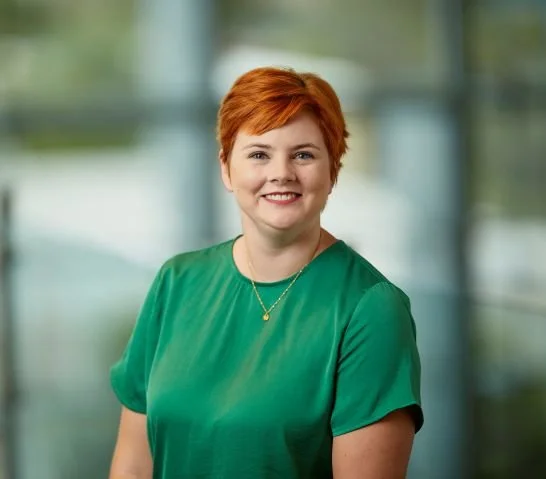
Amber Sewell
she/her/hers
Teaching and Learning Librarian
University of Nevada, Las Vegas
Amber Sewell, she/her, is a Teaching and Learning Librarian at the University of Nevada, Las Vegas, where she works primarily with first- and second-year undergraduate students. Her research interests include games for instruction and outreach, pop culture, and fandom. Creator and host of The LibParlor Podcast, she is also interested in podcasting as a means of making scholarship more widely available.
(Bluesky): https://bsky.app/profile/ambersewell13.bsky.social
(LinkedIn): https://www.linkedin.com/in/amber-sewell-5244b55a/
Dave Eng:
Hi, and welcome to Experience Points by University XP. On Experience Points we explore different ways we can learn from games. I'm your host, Dave Eng, from Games-Based Learning by University XP. Find out more by going to www.universityxp.com.
On today's episode, we'll learn from Amber Sewell. Amber Sewell is a teaching and learning librarian at the University of Nevada, Las Vegas, where she works primarily with first and second year undergraduate students. Her research interests include games for instruction and outreach, pop culture and fandom. Creator and host of the LibParlor Podcast, she is also interested in podcasting as a means of making scholarship more widely available. Amber, welcome to the show.
Amber Sewell:
Thank you so much for having me. I'm so excited to talk about games.
Dave Eng:
I am so excited to have you on the show, Amber too, because I know that from the past Games-Based Learning Virtual Conference, you were one of the specific presenters who was named during last year's conference that we should definitely bring in for this year's conference.
Amber Sewell:
That's wild.
Dave Eng:
I can't say that about everyone else. Yeah, they specifically said you should invite Amber Sewell to the next conference. So based on that, I wanted to talk more about your work specifically around your session from the last Games-Based Learning Virtual Conference. And in that conference you explored the idea of information literacy, which is very apropos because I know that you work for the library as more than an academic skill, specifically information literacy is something that shapes how we interact with the world. So can you walk us through, and you talk about this in your presentation, the ACRL framework, the six information literacy frames inspired your approach to teaching with games. So for those that are not familiar, walk us through the ACRL framework and how you've applied that to using games for teaching and learning.
Amber Sewell:
Yeah, definitely. So information literacy is kind of this huge concept that kind of encompasses every way that humans interact with information. So how is information created? Who gets a voice? How is information valued? Everything from how do we put scholarship and knowledge and conversation with each other and publish it? So it's kind of a big concept. And if you're not a librarian, you may not have heard the term information literacy. You may be familiar with other literacies like media literacy or AI literacy, and all of these kinds of fall under the umbrella of information literacy. So the ACRL framework, ACRL is the Association of College and Research Libraries. The framework is really a way to break down this really huge concept into six approachable frames. So this frames really encompass knowledge and dispositions that help us as librarians talk with other people outside of the field about this really interdisciplinary concept.
So things like information has value. Information creation is a process which talks about how do we choose what method to deliver information in? How do we research and disseminate this? And how do those decisions impact the way that information is received? So it's really big and the framework really helps. So the way librarians often teach is we work in collaboration with disciplinary faculty, and so often I will sit down and listen to their course objectives, what are they trying to achieve, either with an overall course or with a specific assignment. And then I look to the framework to see where there are intersections, where my expertise as a librarian can intersect with what they're trying to accomplish with the course or assignment. And then how bringing information literacy into the discussion can deepen our understanding of a topic.
Dave Eng:
I see. To interrupt you for a moment, do you also through the framework identify... What exactly is information? Is information the same as data or knowledge? Can you talk a little bit more about that?
Amber Sewell:
Yeah, so the interpretation of information is very vague in the framework because it's trying to address... It's very interdisciplinary. So information can be data sets, it can be knowledge practices, it can be oral stories that have been passed down. It can be something as simple as like, do I know how to make a family recipe that's been in the family for generations and how is that passed down and preserved? So information, yeah, it's very... At least with the framework is left intentionally vague so we can kind of sculpt it to fit whatever our disciplinary and instructional contexts are.
Dave Eng:
I see. Okay. That's useful because I think that you talked about information literacy. I was asking specifically how you define it, but like you said, it could be a little bit nebulous specifically if you're working with faculty members who are subject matter experts in the field. And it's probably something that is best left up to how it's interpreted or I guess applied in a classroom rather than identified strictly within a very strict definition in one of your frameworks.
Amber Sewell:
Yeah. And I think it comes down to also where you're positioned in the library. So I work with general education, which means my interpretation needs to be really flexible because I could be talking to students from any number of disciplines. If you ask our science librarian, Melissa Boles Terry, she's going to be able to give you much more concrete examples that her discipline works with most often.
Dave Eng:
I see. Okay. Well, I mean that's good to know because I know that specifically working for the library, you're going to be serving all of the university's faculty and all of the university students. Like you said before, if you are working in a specific discipline and you have a specific librarian for that discipline, there will be, I guess different formats and structures for how you work with those faculty members, or they may have a specific question that comes from students on a regular basis. So it sounds like to me, and this is me coming from someone that has spent a lot of time in libraries but does not have a background in library science or anything else as a resource, right?
Amber Sewell:
Yes.
Dave Eng:
And you're shaping your work to best serve the students and the faculty that you work with.
Amber Sewell:
Yeah, our discipline is inherently... Well, there's debate about whether information literacy is a discipline that I won't go into, but it's inherently interdisciplinary, so it's very flexible and very contextual.
Dave Eng:
I see. The second part, so I wanted to get into here with your specific presentation was you talked about information literacy, you talked about the framework, but how does this specifically line up with games? So during your presentation you talked about using short, adaptable games to bring information literacy concepts to life. So could you share an example of one of those games, specifically what it looks like in practice and how students tend to respond to it?
Amber Sewell:
Yeah, definitely. So I mentioned that often my work involves collaborating with a faculty member to kind of leverage how my expertise with information intersects and can enhance classroom conversations. And so in that capacity, one of my roles is coordinator to a first year seminar for exploring majors. And so that class is really interested in helping students understand how their knowledge and skills that exist in the everyday life can help them be successful college students. And it's also trying to help them figure out a major. And so when I met with the coordinator of that program, they were really receptive to games but weren't sure how games would fit into their class. And so the first thing I did was look at the course objectives and identified those two as, overall what the course is trying to achieve. And then I go to the framework and I see where out of these six frames, is there something that pops out at me? And so one of the frames is authority is constructed and contextual. And basically it's the idea that information reflects their creators expertise and credibility.
And depending on your information need, that authority differs. And so I really saw that fitting really well with trying to get students to see how their existing skills and knowledge translates into an academic context. And then also when they're trying to choose a major, they're going to go to different kinds of information sources. It's like they're not going to hop into a database and try to search what's the best major because that's not really what scholarly research is for. It's not for first year students trying to choose a major. It's for other experts in the field to further research.
And so what I was able to do was take this frame to the coordinator and say, this is where I think things overlap. And so I designed a game called Authority Argle Bargle, which argle bargle is like a British word for arguing silly. And this game was really inspired by the fact that the final assignment for this class is students are put into teams and have to debate what is the best major. So it's a tournament style debate. And I know that students, especially first year students, public speaking is really intimidating for them. And one of my favorite things about games is it creates a very low stakes environment.
And so I wanted to give them a chance to practice that public speaking, but in a silly, very low stakes way. And then also bringing in that authority piece, like I mentioned, when you're trying to figure out what major to choose, you're going to consult a bunch of different sources. And so this game was really designed to get them thinking about why they trust certain sorts of information to make big decisions.
So logistics wise, the class was split into four teams. They'd go two and two against each other. Teams were assigned a major, so I would consult with the instructor beforehand to choose a major that none of the students were interested in. So for instance, maybe nobody was interested in chemistry, so no team would have an advantage because students weren't going to do any research to make their arguments about the best major. I just wanted them to think about why they valued certain information sources. So teams would come up two at a time, they'd get the same major. I had a wheel that they would spin to see what they needed to know about the major. So how expensive is it? How many credits do they need? Do they need to go on to get more degrees afterwards?
So let's say a team is chemistry, and each team needs to figure out can they just get a bachelor's or do they need to get an advanced degree? And then each team would spin and get a random information source. So maybe one team is going to go to Wikipedia to find out if they need more degrees, and maybe one team is going to go to their advisor. And of course, some of these pairings were really great, and some of them were absolutely nonsense. They weren't going to work. And it was designed to be silly. They're not doing any research, they're just trying to use their existing knowledge of why does this information source have credibility, and how does that intersect?
Dave Eng:
Yeah.
Amber Sewell:
Oh, go ahead.
Dave Eng:
Oh, can you talk a little bit more about what was something that was particularly silly? You talked about Wikipedia, you talked about an advisor. What are some other things on the wheel?
Amber Sewell:
Scholarly sources were one I put on there that was, it's never going to work. Like I said, those are articles written for other experts. And so if you got that, it was a losing argument or some of them were social media, which students came up with really fascinating arguments for why social media would be a good or a bad source. And so this really led to some interesting discussion, especially with social media, talking about how charisma is actually a type of authority, like the confidence with which somebody presents their information could be total nonsense, but we trust it depending on maybe if it's a YouTube video. What is their background? What's the production quality? Are they citing sources even real or not? And so students would feel really silly making these grand arguments about why you should trust this person on TikTok about how much a degree costs. But it really led to some interesting conversations about, but we do buy things just because someone we says it was a good idea and how does that impact all of our decision making.
Dave Eng:
My follow-up question is, was there sort of a meta discussion about this experience in that when students, when they spun the wheel, they went to whatever source it was, whether it's a faculty member or Wikipedia or something else that them seeking out that source of information and then them going back to the class and then presenting that information, they are now a part of the authority on that source. Is that something that you talked about?
Amber Sewell:
Yeah, a hundred percent. Again, part of that charisma came up. Somebody would talk about scholarly sources and the information they were saying was all incorrect because they're first year students, maybe they haven't used scholarly sources before, but they're being so confident in how they're presenting this really incorrect information. They convinced the other half of class that's voting and their team wins. And then I, as the librarian have to come in and say, Great discussion. This is a great example of how charisma and confidence works, because literally everything you just said was wrong and let's talk about it." So yeah, often it would lead to kind of meta discussions.
Dave Eng:
Right. And what about the faculty member that you're working with, how did they interpret the results of this game for their class?
Amber Sewell:
They found it really useful. It got students really excited to talk about the information sources. They were consulting in new ways. That was part of the idea of the game is to just kind of reframe how we make these decisions and who we go to. I think first year students especially sometimes feel insecure in what information an instructor wants, and so often they'll default to the more scholarly, like, oh, obviously I'll go to a database to choose a major. And so this gives them the freedom to be like, actually, maybe that's not the best choice and honestly not a thing I would do in real life. I just thought my teacher would want me to say that. And so it gave them the freedom to kind of myth bust some of those assumptions about what conversations in classrooms look like.
We did a couple of iterations, and then there were changes in the course. So this activity didn't really align with the objectives anymore, so we stopped teaching it and the faculty were really sad about it. They had a good time. They really saw that students, it lowered their barriers to engaging with each other. It made them more comfortable in the classroom and with each other, so they were really positive about it.
Dave Eng:
Great. And then based on this one particular use case, say there's another librarian at a different university somewhere else in the country or in the world, and they get approached to use, what is it, information... Oh, no. Major Argle Bargle. If they wanted to approach something like that with their own faculty members. And what are some lessons learned from you? What did you learn throughout this process that other people could take into account if they try to replicate your process?
Amber Sewell:
Yeah. I think Authority Argle Bargle is perfect for adaptation for any major because in any discipline, you're going to have information sources that you consult for different needs. So it's a great way to kind of interrogate some of our assumptions about who we go to for information. Being flexible and asking for feedback was one of the biggest pieces from this experiment.
The first iteration students were kind of uncomfortable sometimes because I had each team elect a spokesperson, so only one person would come to the front of the class and kind of make the argument for their whole team. And that put a lot of pressure on those people. And so the next iteration, we developed a slide that let them map their argument out on a slide so they had something to reference. The whole team came up together and each person took a bullet point. So it really made it much lower stakes. Again, asking for feedback from students, from instructors. And I also went to the final project that this was designed to support to see where that alignment happened. And so that was really helpful for me to be like, okay, I have what the instructors told me about how this would enhance the learning, but I really got to go in and see what kind of impact this had on the final assignment.
Dave Eng:
Great. Thank you. That's really insightful. I think to summarize for the audience, keeping in mind what the goals are for the instructor, what the goals are for the class, who the students are, what the overall learning outcomes are, I think is incredibly important for one, building any successful learning or structure for learning. And then two, hopefully applying some games in order to meet that outcome. So great insights. Thank you, Amber. I appreciate that.
Amber Sewell:
Yeah, thank you.
Dave Eng:
Third, and last question here is something I wanted to talk about before, which is the big picture. So I know we brought this up during your introduction, but I know you talked about blending information literacy, pop culture, and even fandom. Plus, I know you're also a podcast host, so this is a podcast about you also being a podcast source. Do you see games and podcasting playing a role in making academic scholarship more accessible and engaging? And if so, how do you see that happening in the future?
Amber Sewell:
Yeah, definitely. Thank you so much for this question because this is a topic I feel very passionate about. I think academic scholarship is really important. Scholars are studying things, everyday behavior or things that impact everyday people's lives, but often that information is gate-kept and isn't actually reaching the communities who can use this information. Either it's behind paywalls with scholarly journal and access fees, or even if people can get to it, it's written for experts by experts. It's not written so that somebody with no background in the discipline can cognitively access the information and figure out how to use it.
And I think games and podcasting are great ways to take the scholarly information that's really important and often taken from those communities. Like we'll go in and we'll study people and then they won't get any benefit from that. And so it's really a great way to make that information more accessible. I think with games, being able to put skills and information in new contexts in a way that really highlights how it interacts in our day-to-day life. So with Authority Argle Bargle, you may not critically question why you go to one information source versus another, and that game really highlights and gets you thinking about that process.
I listen, I'm a nerd, so I listen to a ton of podcasts that are made by academics off the clock. And what they do really well is take scholarly information and then translate it so that everyday people can use this. And I think we saw this during COVID. Science communication is really important and hard a job, and there were people like Dr. Raven the Science Maven who is a scientist who converted these studies being done in two wraps to make them more accessible so people understood why the vaccine was being developed and how. And so it's really games and podcasts and these other ways of translating scholarly information for everyday audiences are just really important so that we are able to make informed decisions.
Dave Eng:
Right. Wow. Thank you. I know that games, I've talked about it and interviewed some other people as a medium is very important. Also, the fact that podcasting is another form of medium. I would say that I think for our current pop culture in zeitgeist that the quote we should start a podcast is the current, we should start a band. Before it was like we should start a band, but now it's, we should start a podcast because one, it's very approachable and something that you host obviously and I host as well.
But I think that to your point about science communication and just about academic communication, I think in general is really important because if you read a lot of journal articles, it's a lot of people in the ivory tower writing for other people in the ivory tower, whereas there is a huge community of other people that could benefit and are interested in this information. But I wanted to ask you, I listened to a couple science podcasts and I want to know if you also listen to them. One of them is, do you listen to Science Vs on, what was it? It was Gimlet originally, but now it's Spotify, I believe.
Amber Sewell:
No, but I am making a note of that.
Dave Eng:
Okay. That is one I've been listening to for years. The host is Wendy Zukerman, but she talks about science versus vaccines research or science versus climate change. And she talks about, I guess really the pros and cons of a particular aspect of this topic that people may not be having a debate about but are interested in doing so. And then the other one is, I'm blanking on the name right now. I'm trying to look for it on my phone, but I cannot find it.
Amber Sewell:
It always happens.
Dave Eng:
Yeah. But it's another science podcast from NPR that I listen to. But I think overall, the takeaway and the concept is that there's great information out there, there's great data, there's a lot of experts, but a lot of, like you talked about before, the information literacy is one, knowing what is available. And then two, knowing how to consume it. And I guess three, if you're the subject matter expert or the faculty member, knowing your audience and how to best relate that information to your students and your learners.
Amber Sewell:
Yeah. That sums it up beautifully.
Dave Eng:
I appreciate that. So we've run out of time. I wanted to throw it back to you, Amber. Again, thank you for joining us today. Appreciate it. Where can people go to find out more about you online?
Amber Sewell:
Yeah, I think the best place is Bluesky. I'm Amber Sewell 13 on Bluesky. That's where I tried to migrate from academic Twitter to academic Bluesky. It's not as active yet, but that's where I post most frequently. I'm also on LinkedIn. And then honestly, the thing I update most regularly is my CV on the UNLV directory page.
Dave Eng:
Oh, okay. Well, I'll make sure that I include links to all of that in the show notes. And then for those that are interested, the name of your podcast is LibParlor. So that's L-I-B-P-A-R-L-O-R, is that correct?
Amber Sewell:
Yeah, the LibParlor Podcast.
Dave Eng:
Okay. And then people can download that podcast wherever they get their podcast usually?
Amber Sewell:
Yep, in any podcatcher.
Dave Eng:
All right. Sounds good. Well, thank you, Amber. I appreciate your time today.
Amber Sewell:
Thank you so much. This was great.
Dave Eng:
I hope you found this episode useful. If you'd like to learn more then a great place to start is with my free course on gamification. You can sign up for it at www.universityxp.com/gamification. You can also get a full transcript of this episode, including links or references in the description or show notes. Thanks for joining us. Again, I'm your host, Dave Eng from Games-Based Learning by University XP.
On Experience Points, we explore different ways we can learn from games. So if you like this episode, please consider commenting, sharing, and subscribing. Remember, subscribing is absolutely free and ensures that you'll get the next episode of Experience Points delivered directly to you. We'd also love if you took some time to rate the show. I live to lift others with learning. So if you found this episode useful, please consider sharing it with someone who could also benefit. Also make sure to visit University XP online at www.universityxp.com. University XP is also on Twitter and Bluesky as University XP and on Facebook and LinkedIn at University XP. Also, feel free to email me anytime. My email address is dave@universityxp.com. Game on!
Cite this Episode
Eng, D. (Host). (2026, January 11). Amber Sewell on Games as Information Literacy. (No. 155) [Audio podcast episode]. Experience Points. University XP. https://www.universityxp.com/podcast/155
Internal Ref: UXPMP0KML4SX
References
Baxter, R. (n.d.). Dr. Raven the Science Maven. The Science Maven. https://thesciencemaven.com/
Eng, D. (2021, October 26). Applied games-based learning. University XP. Retrieved September 22, 2025, from https://www.universityxp.com/blog/2021/10/26/applied-games-based-learning
Eng, D. (2024, August 20). Game goals vs. learning outcomes. University XP. Retrieved September 22, 2025, from https://www.universityxp.com/blog/2024/8/20/game-goals-vs-learning-outcomes
Kwong, E., & Barber, R. (Hosts). (n.d.). Short Wave [Audio podcast]. NPR. https://www.npr.org/podcasts/510351/short-wave
Office of Management and Budget, General Services Administration, & Office of Government Information Services. (n.d.). Glossary: Data vs. information. In Resources.data.gov glossary. U.S. General Services Administration. https://resources.data.gov/glossary/data-vs.-information/
Yagoda, B. (2012, July 10). “Argle bargle”. Not One-Off Britishisms. https://notoneoffbritishisms.com/2012/07/10/argle-bargle/
Zukerman, W. (Host). (2017, October 4). Vaccines – Are they safe? [Audio podcast episode]. In Science Vs. Gimlet Media. https://podcasts.apple.com/us/podcast/vaccines-are-they-safe/id1051557000?i=1000392262930
Zukerman, W. (Host). (2023, December 7). Climate crisis: We’re solving it?! [Audio podcast episode]. In Science Vs. Spotify Studios. https://podcasts.apple.com/us/podcast/climate-crisis-were-solving-it/id1051557000?i=1000673919714